
Happy Father's Day: Thoughts on the "Begatting" Process
- mrymntcpw
- Jun 20, 2021
- 3 min read
Updated: Jun 9, 2025
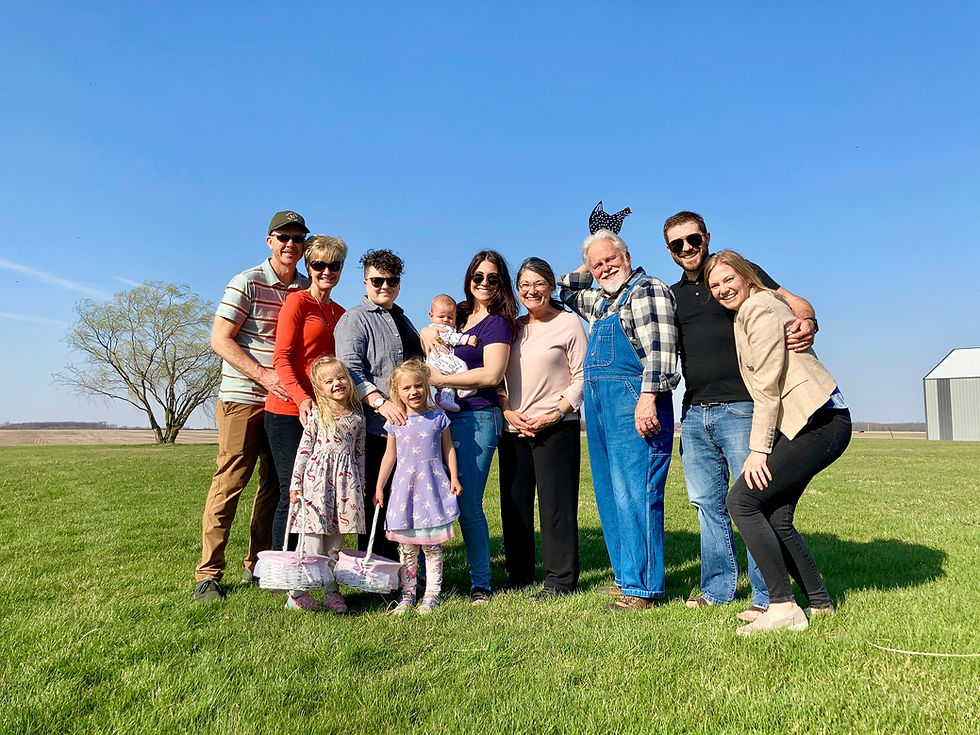
Wolivers Easter 2021
KJV: Matthew I, verses 1&2 and 17:
The book of the generation of Jesus Christ, the son of David, the son of Abraham. Abraham begat Isaac; and Isaac begat Jacob; and Jacob begat Judas and his brethren…etc…So all the generations from Abraham to David are fourteen generations; and from David until the carrying away into Babylon are fourteen generations; and from the carrying into Babylon unto Christ are fourteen generations.
Wow! That’s a lot of “begatting” and a lot of fathers. But why does Matthew begin his chapter with lineage? Well, because he wanted to recognize the “chosen” line.
But I want to explore a couple of other aspects of the “begatting” process: Biology and Responsibility.
Biology
The Begatting Cycle: DNA-Brain-Hormones-E-Sperm-Mother-Egg-Baby-DNA.
Let’s start with libido (sex urge).
From: https://www.truelibido.com/what-is/libido/
Desire for sex, or libido, is normally set off by some sort of sexual stimulation. This can be a visual observation, it can be a touch or other sensory stimulation, or it could be a thought or a sexual fantasy, etc.
This stimulation causes dopamine as well as a neurotransmitter called glutamate, to be produced in the limbic system of your brain.
This brain system is common to all mammals and is considered one of the oldest parts of the brain. It regulates emotion, motivation, pleasure, reward as well as other functions.
Dopamine and glutamate then fire up the reward and pleasure centers in your brain, and one starts desiring sex.
Dopamine fires off messages that go from the brain, down the spinal cord to the penis and instructs blood to flow into the penis to produce an erection (E). Although one may have thought that everything related to sexual desire happens between the legs, the experience actually occurs in the brain.
Libido, like all other experiences, is brought about by electric impulses flowing along paths of connected nerve cells in the brain.
The genes that sit in the DNA have one main objective: To continue to exist. The body is (for our genes) a temporary vehicle that carries and protects them. Then we pass them along to our children.
How could the genes come up with a way to increase the chances that our bodies pass on the genes to a new vehicle? They gave us libido! And orgasms. And love.
The genes figured out that by motivating us to feel sexual lust, by enabling us to fall in love, and by letting us feel extreme pleasure in the act of creating babies, we would create more babies!
The role of libido is to motivate us to procreate – to create new life and thereby sustain the life of the genes.
https://www.truelibido.com/what-is/libido/
For you readers of the fairer gender, if you feel marginalized, I offer the following words from Bill Bryson from his book, The Body:
Interestingly, sex isn’t necessary. Quite a number of organisms have abandoned it. Geckos, the little green lizards that are often encountered clinging like suckered bath toys to walls in the tropics, have done away with males altogether. It is a slightly unsettling thought if you are a man, that what we bring to the procreative party is easily dispensed with. Geckos produce eggs, which are clones of the mother, and these grow into a new generation of geckos. From the mother’s point of view, this is an excellent arrangement because it means that 100 percent of her genes are inherited. With conventional sex [in humans], each partner passes on just half its genes, and that number is relentlessly thinned with each succeeding generation. Your grandchildren have only a quarter of your genes, your great-grandchildren only an eighth, your great-great-grandchildren a mere sixteenth, and so shrinkingly on it goes. If genetic immortality is your ambition, then sex is a very poor way of achieving it. (pgs. 278-279).
But let’s return to Fatherhood.
Responsibility
After the baby is born, the real work begins. One has a choice here: 1) be derelict and figuratively throw your offspring into the lake of life to sink or swim; or 2) take responsibility for your actions and mentor the child in a way that brings joy and beauty into the world. Fatherhood is a journey of rewards and sorrows, but the countless joys one experiences makes the road well worth taking.
I posit that our purpose in life is to observe and then strive to procreate, create or recreate. I may not be one of the “chosen” people, but I am thankful to be a part of the begatting process. In conclusion, I offer a five-generation photolouge of the Woliver line of men whose genes I carry.

Great-Grandfathers: Alex Woliver (1874-1954) left; Isaac Baker (1877-1962) right

Earnest William Woliver (“Papaw”) (4/8/1903-8/23/1980)
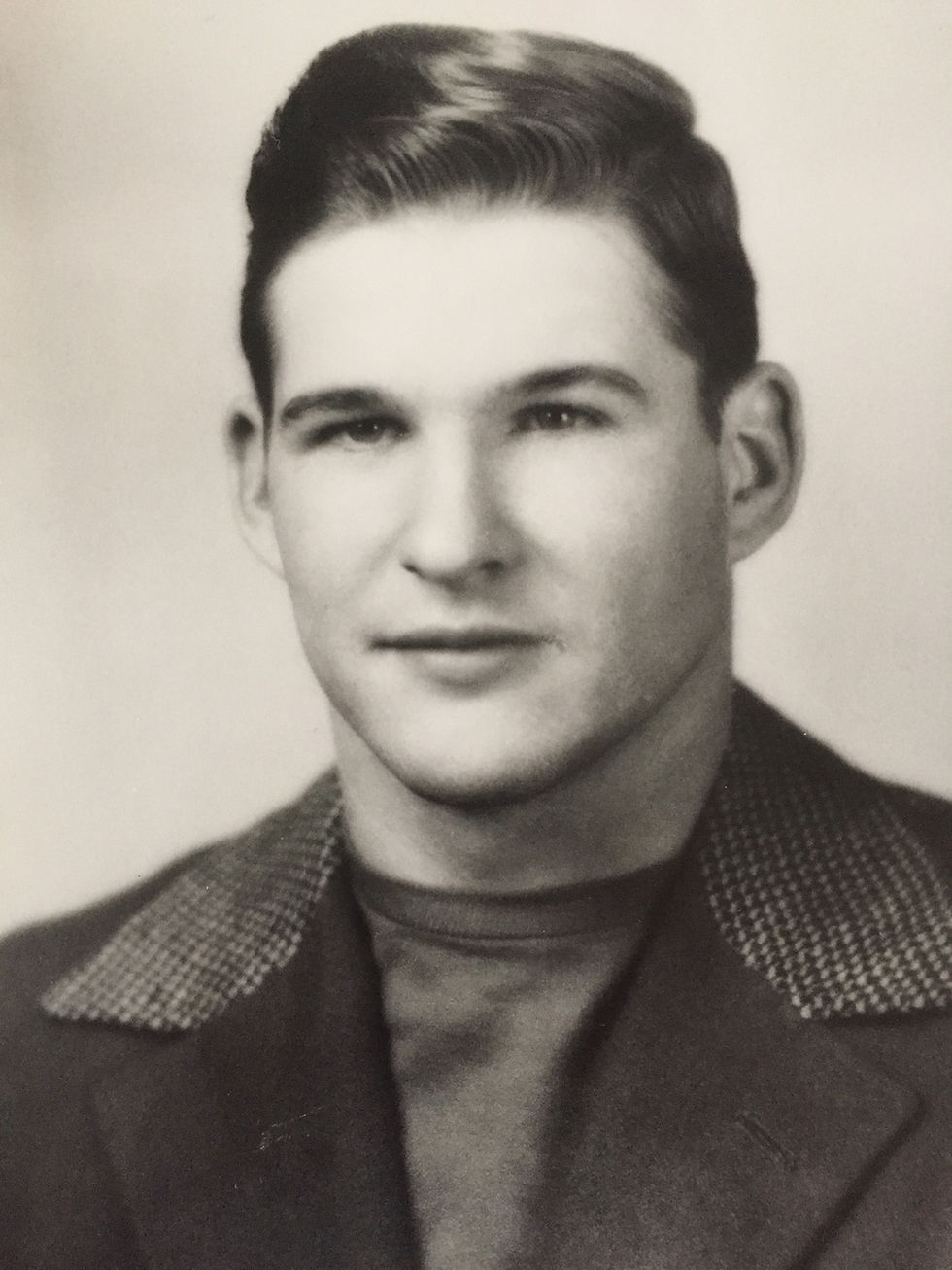
Charles L. Woliver (Dad) (May 21,1927-May 9, 2017)

Charles Patrick Woliver, born October 6, 1952

Simon Robinson Woliver, born January 1, 1987
Good lookin' genes, even if I do say so myself. Happy Father's Day!
CPW


Comments