
A Cracked Liberty Bell
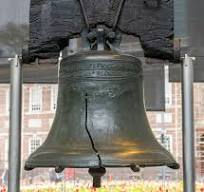

Today we celebrate the 250th Anniversary of America’s Declaration of Independence, and fifty years ago, Rett and I stood in front of the Liberty Bell in Philadelphia and celebrated with pride what, as a symbol, it stood for. Now in 2026, I observe the crack in the bell and see it as a metaphor for how ruptured the “United” States government has become under the current leadership.
But before we celebrate our "independence", let's acknowledge our sins. In her best selling book entitled An Indigenous Peoples’ History of the United States, Roxanne Dunbar-Ortiz writes, “US history, as well as inherited Indigenous trauma, cannot be understood without dealing with the genocide that the United States committed against Indigenous peoples. From the colonial period through the founding of the United States and continuing in the twentieth century, this has entailed torture, terror, sexual abuse, massacres, systematic military occupations, removals of Indigenous peoples from their ancestral territories, and removals of Indigenous children to military-like boarding schools. The absence of even the slightest note of regret or tragedy in the annual celebration of the US independence betrays a deep disconnect in the consciousness of US Americans.”
History of the Bell
The Liberty Bell is a familiar symbol of freedom in the United States. It was ordered by the Pennsylvania Assembly in 1751 to commemorate the 50-year anniversary of William Penn's 1701 Charter of Privileges; it was to be installed in 1752 in the Pennsylvania State House, now known as Independence Hall. The bell was cast in London, England and then shipped to Pennsylvania.
Soon after it arrived, the English bell cracked. In 1753, a new bell was cast from the metal of the English bell by local craftsmen John Pass and John Stow. Their names and the year in Roman numerals, MDCCLIII, are marked on the bell. It also has a Bible verse written on it: “Proclaim LIBERTY throughout all the Land unto all the inhabitants thereof” (Leviticus 25:10).
On June 7, 1753, the bell was hung in the tower of Independence Hall. In 1777, during the American Revolution, British troops captured Philadelphia. For safekeeping, the bell was moved to Zion's Reformed Church in Allentown, PA. It was returned to Philadelphia in 1778.
In the early 1800s, people who wanted to outlaw slavery called it the “Liberty Bell” and used it as a symbol for their campaign.
In 1846, another crack began to develop in the bell, and it was repaired. It rang for George Washington’s birthday on February 23, 1846, but then it cracked again. In order to repair the bell, a slot was carved along the length of the crack that prevented the two sides of the bell from vibrating against each other. Two rivets were inserted in this slot to control the vibration of the two sides and restore the bell's tonal quality.
The bell traveled around the country after the Civil War (1861-1865) but since 1915 it has remained in Philadelphia. Today, the Liberty Bell is on permanent display in a visitor center next to Independence Hall.
So today I turn to Alfred, Lord Tennyson and offer a stanza of "Ring Out Wild Bells"
Ring out false pride in place and blood,
The civic slander and the spite;
Ring in the love of truth and right,
Ring in the common love of good.

As we clasp hands together, let us sing out:
My country, 'tis of Thee,
Sweet Land of Liberty
Of thee I sing;
Land where my fathers died,
Land of [Indigenous] pride,
From every mountain side
Let Freedom ring.
from left to right: Chief Joseph, Geronimo, and Sitting Bull
CPW


Yes! A blood-stained banner. And let us also remember the physical and economic infrastructure of this country was built on the backs of and at the expense of enslaved peoples!